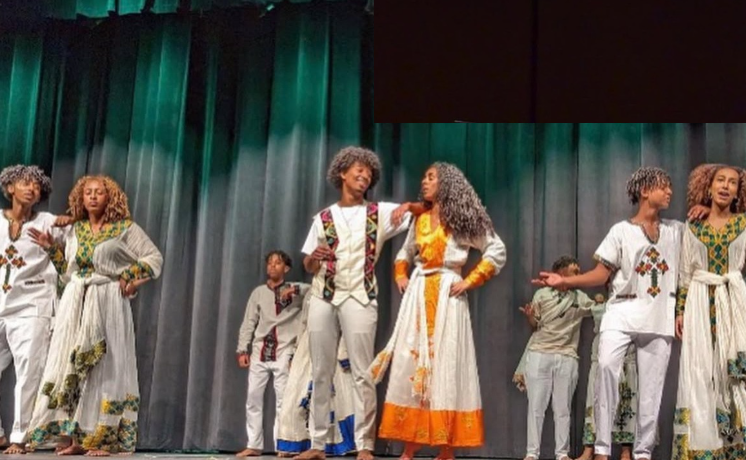

While many of WS celebrate and enjoy Christmas on December 25th, Orthodox Christians and more specifically Ethiopian Orthodox Christians wait to celebrate the holiday on January 7th. The holiday, more commonly known as Genna, is an important part of Ethiopian Orthodox culture.
“It’s one of the holidays where I feel closest to my faith and my culture. As an Ethiopian Orthodox, Genna isn’t just a day on the calendar, it’s a reminder of my roots, my identity, and the traditions I grew up with. The prayers, the church service, the fasting, and the gathering with family and friends all make me feel grounded and connected to something much bigger than myself,” said sophomore Soliyana Yimam.
Leading up to the holiday, most Ethiopian Orthodox Christians participate in a month-long fast in which they avoid all animal products, consuming only plant based foods.
“Me and my family fast all the way until Genna. It’s hard sometimes, especially at school when everyone is eating stuff I can’t eat. But it also makes the holiday feel more meaningful,” said junior Kidus Tafesse.
The fast is much more than abstaining from certain foods though, it has a deep religious meaning that represents a strong religious devotion.
“Fasting is about self-control, humility, and spiritual focus. It’s a reminder to slow down, reflect, and strengthen my relationship with God. It teaches me tience, discipline, and gratitude. It isn’t just about food, it’s about preparing your heart and mind for the holy day,” added Yimam.
After the month-long fasting period, different families break their fast with different things. Depending on their personal family traditions, students indulge in traditional dishes that mark the end of the long month.
“We usually break our fast with Doro Wat and Injera. It’s special because my mom makes it every year and it tastes even better after fasting. It just feels like home,” said Tafesse.
For others, breaking their fast is marked with meals that their family traditionally makes.
“I typically break my fast with Tibs. It doesn’t hold significance to me, I just eat it because it’s what my mom makes for us,” said senior Nuenyat Mesfin.
Although Genna is a religious observance day according to the FCPS calendar, many students feel as though it should have more of a significance in school.
“I think schools should acknowledge Ethiopian Christmas the same way they acknowledge American Christmas because they’re celebrated on different days, and hold significance to those that celebrate. The same way we get school off for Christmas and other holidays celebrated by other groups, I think we should also get school off,” said Mesfin.
While noting that Ethiopian Christmas holds the same significance as American Christmas, students also note the distinctions between the two.
“American Christmas feels loud and very focused on presents, decorations and buying things. Genna is quieter and more peaceful. It’s more about faith than excitement,” said Tafesse.
Most students tend to celebrate both Christmases though, participating in both cultures and traditions.
“I celebrate both Genna and Georgian Christmas. They’re different to me because I find that the Georgian Christmas focuses more on decorations and presents, meanwhile Genna is celebrated by staying overnight at church while we sing hymns all night,then we get the blessing of breaking our fast together,” said Mesfin.
With the many traditions that come with Genna, many students have moments they look forward to the most. Everyone has a part of the holiday that stands out to them. For some, it’s about staying grounded and connected to their culture.
“My favorite part is staying connected to my identity and carrying my traditions with me.
Even when everything around me is focused on December 25th, I still get to celebrate Genna with my church and my family. It reminds me of who I am and keeps me grounded,” said Yimam.
For others, it’s about sharing their culture with those that aren’t a part of it.
“My favourite part is being able to share my culture with friends who don’t know about it. It feels good when people ask and actually want to learn,” added Taffesse.
For Ethiopian Orthodox Christians at WS, Genna is more than a Christmas in January. The holiday is shaped by patience, resilience and faith. The fast builds anticipation and the day itself brings joy and happiness. Even while balancing school and daily responsibilities, students continue to honor traditions that connect them to their culture and religion. In a school setting where holidays pass quickly, Genna serves as a reminder that not all holidays look the same but all holidays deserve recognition.