Lunar New Year is a major festival marking the first new moon of the lunisolar calendar. It is widely celebrated across East/Southeast Asia, and it symbolizes family reunions, shedding old misfortunes, luck, health, and prosperity. Some families celebrate Lunar New Year through a family reunion dinner that brings whole families together who don’t meet that often, and giving and receiving red envelopes.
Lunar New Year is celebrated slightly differently across cultures. Vietnamese sophomore Ben Doung celebrates Lunar New Year by playing games.
“Cultural things that we do in Tet (Vietnamese Lunar New Year) is that we play games such as gambling to test our luck, such as Bau Cau which literally means ‘Gourd-Crab-Fish’ translated,” said Doung. “Before games, though, the children come to the parents to give their blessing to them wishing them good luck and health for the rest of the new year and in exchange, are given ‘Li Xi,’ which is basically lucky money.
The traditional foods Vietnamese eat during Lunar New Year are called “Banh chung” and “Banh tet”. Banh chung is a Vietnamese savory rice cake made from glutinous rice, mung beans, and pork, wrapped in banana leaves, which is boiled for hours. Banh tet is a traditional Vietnamese cylindrical sticky rice cake.
Doung also talks about the traditional clothes Vietnamese wear during Lunar New Year.
“I’m not sure if this is for everyone, but in Vietnam, everyone wears ‘Ao Dai.’ Ao Dai can come in different colors. Of course, accessories can be added to Ao Dai if you want,” said Doung.
Taiwanese freshman Grantley Quicho celebrates Lunar New Year similarly by eating traditional food with family while celebrating and taking out the bad luck and welcoming good luck for the new year.
Quicho’s family celebrates Lunar New Year by placing eight bowls of oranges on the dining table.
“The number eight sounds like ‘wealth’ in Mandarin, while the oranges represent gold coins,” said Quicho.
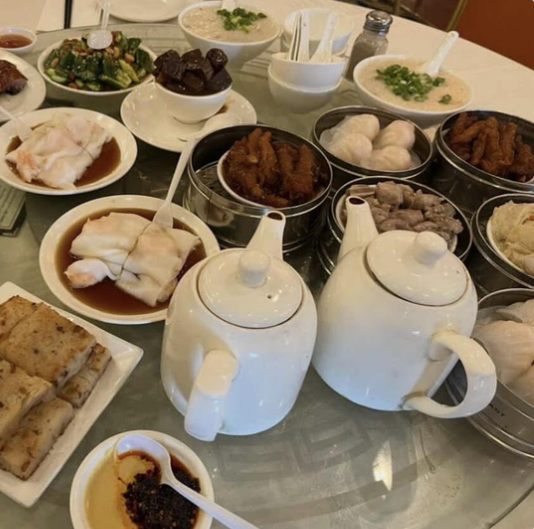
On Lunar New Year, Quicho’s family usually eats shrimp dumplings because they resemble the shape of Chinese gold ingots, symbolizing wealth for the new year. Quicho’s family also wears red clothing because red is considered the luckiest color in Chinese and Taiwanese culture, representing fire, prosperity and joy.
Quicho enjoys Lunar New Year because it is an opportunity to get together and have time to eat food with his family.
“I enjoy the Lunar New Year very much, it is a super fun holiday where I get to celebrate cultural traditions with my family and eat delicious food,” said Quicho.
Lunar New Year may be different for different families, but the main points are the same, which is spending time together as a family and wishing for good luck for the upcoming year.