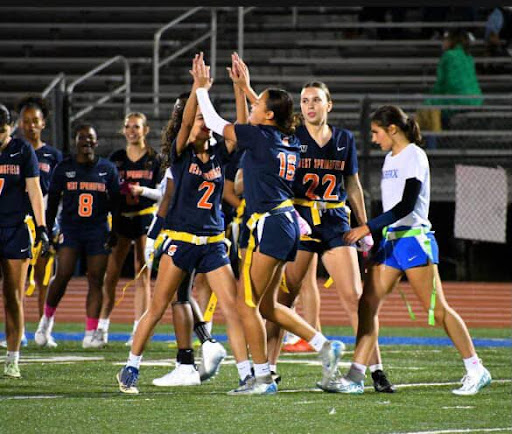
For decades, Powerpuff football has been a beloved homecoming tradition. Senior and junior girls face off in a friendly game of flag football while the boys take to the sidelines.
“I think it’s really cool to see some more girls in a predominantly male dominated sport,” said sophomore Reagan Jacobs.
While Powerpuff focuses on fun, a new form of girls’ football has been steadily rising in schools across the country, one that’s turning playful rivalry into serious competition.
“Flag football has challenged me more than any other sport because I’ve never been so determined to do so well while having fun,” said senior Izzy Rivera.
Unlike Powerpuff, which is a single-night event, flag football is structured and competitive. Players attend regular practices, learn routes, study plays, and compete in full seasons against other schools.
“Typical practices are warming up with small jogs and throwing and catching the ball. After that we usually split up and work on offense and defense. Towards the end, we scrimmage to practice our plays,” said Rivera.
The rise of flag football represents more than just a new sport. Historically, Powerpuff served as a symbolic event, In a time where girls’ access to sports was limited, Powerpuff offered a fun, empowering chance to take the field, even if just once a year.
“I oversee the Leadership class that is in charge of planning the Powerpuff event,” said athletic director Jenny Sobota. “The teachers and SGA sponsors and I work closely to plan an event that is a positive experience for students and helps build a positive culture for the school.”
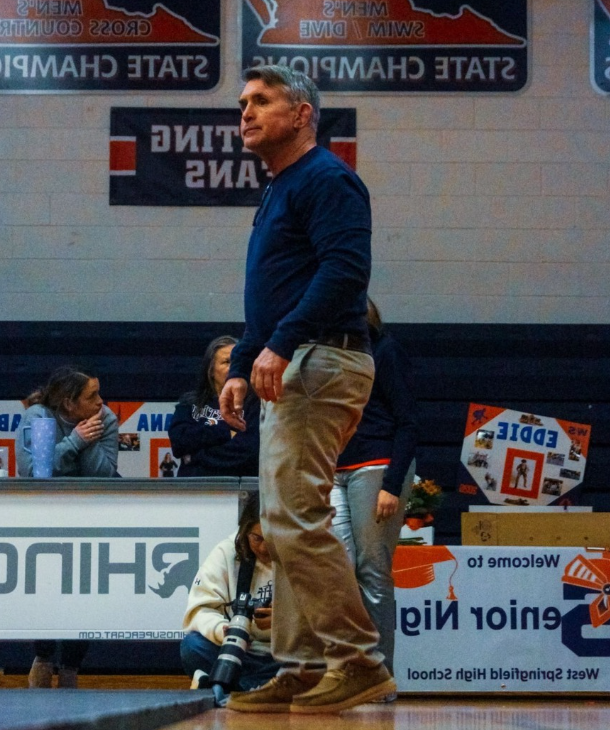
Flag football coach Bill Gibson finds Powerpuff to be a positive experience.
“I like Powerpuff because it develops class unity,” said Gibson.
Now, girls’ flag football is turning that symbolic statement into a real, year-round opportunity. The sport has moved from sidelines and fundraisers into full-fledged athletic programs, complete with referees, tournaments, and college scholarships.
“Even though this is our first year with high school flag football, I’m excited for us to show that we [girls] can play football just as well as anyone else can,” said Rivera.
But with flag football gaining more recognition, some wonder if Powerpuff will eventually fade as schools focus on more organized programs.
“Flag football is more of a real sport now, and people want to actually play and win, not just do it for a one time thing,” said senior Jillian Reichard.
While both games utilize the idea of flags instead of tackles, the similarities mostly stop there. Flag football is about precision. Clean passes, sharp defense, and quick decision-making.
“Flag football gives girls a better recognition of what we are capable of doing,” said junior player Hollin Horn. “I know that our flag football team will continue growing immensely from here.”
Yet, even as flag football rises, many players see the two games as connected rather than competing. For some, Powerpuff is the first time they ever play football, a gateway to something bigger.
“Compared to Powerpuff, flag football gives you more of a chance to build long term relationships and connections, but Powerpuff still allows for a lot of teamwork and fun,” said Jacobs.
Finding the balance between tradition and progress might be the key to keeping both games alive. Powerpuff brings energy and spirit; flag football brings opportunity and athletic growth.
“Powerpuff is always fun and somewhat competitive but what draws girls to flag football is definitely the competition. It depends what you want out of football,” said Horn.
From the peppy nature of Powerpuff to the strategy of flag football, both games highlight how girls’ sports are evolving, from spirit to sport, from spectacle to skill.
“Even when I’m on the sideline not in action, it’s still super fun to be able to cheer on all my teammates creating history for flag football,” said Horn.
And as the lights shine down on both games, one thing is clear: whether it’s Powerpuff or flag football, the future of girls’ football looks bright.