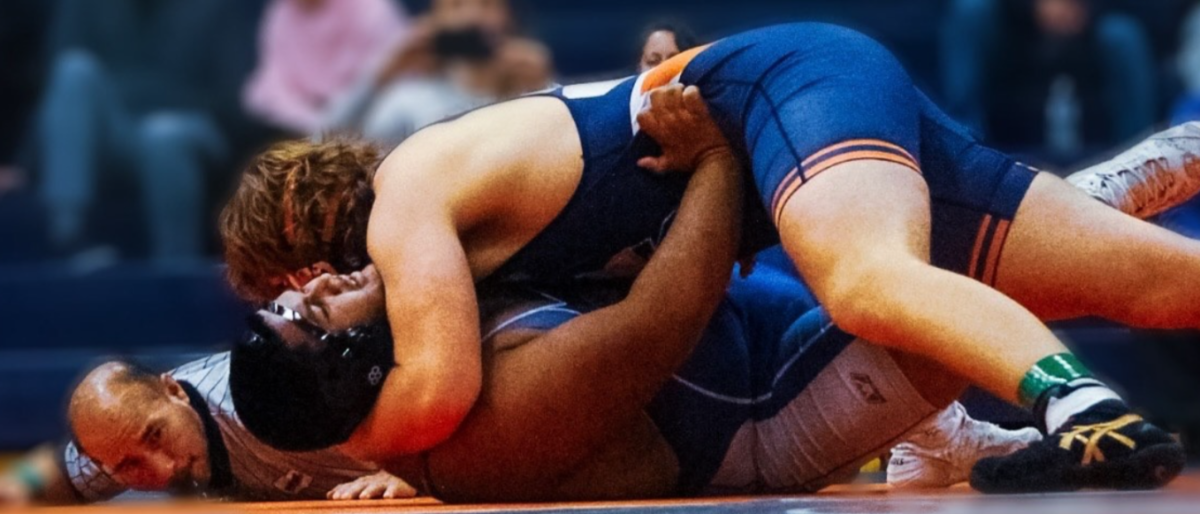
From the stands, wrestling looks like six minutes of controlled chaos. Two athletes collide, a whistle blows, and someone’s hand is raised. What most people never see is what happens long before that moment: the hunger, dehydration, and mental battle wrestlers fight just to step on the mat.
For many wrestlers, the toughest opponent isn’t across from them. It’s the scale.
A weight cut usually begins weeks before competition. Wrestlers slowly reduce calories, which is often the easiest part. The challenge comes during match week, when athletes begin flushing water from their systems. As the body dehydrates, it enters survival mode.
“You feel like pure death. Your body literally thinks it’s dying. It’s hard to think straight or even fall asleep. You’re in fight-or-flight the whole time, ready to do anything to get food or water, but you can’t,” said senior lightweight wrestler Adam Husseini.
Despite popular belief, cutting weight is not simply starving or skipping water. Wrestlers must still have fuel in their bodies to perform. The battle is balance, burning more than you consume while staying strong enough to compete.
“Cutting weight is pretty challenging, especially if you don’t prepare for it. Wrestlers can cut weight through a calorie deficit, but the most common method is a water cut. You avoid sodium and carbs because they make your body hold water,” said junior Zolboot Ganbold. “You drink a lot of water, then the day before weigh-ins you cut as much water weight as you can, usually by doing intense cardio in layers, and you don’t eat or drink until after weigh-ins.”
As weigh-ins approach, the pressure intensifies.
“My energy drops. My mood gets shorter. My focus gets worse in school and sometimes in practice. On the mat, I feel light but not always strong. If the cut is too big, my pace and power suffer,” said Beishembiev.
A typical wrestler’s day during the season revolves entirely around the sport: wake up, check weight, go to school, eat small and clean, lift or condition, practice, then repeat. Social lives shrink. Sleep becomes difficult when hunger and dehydration set in.
“Wrestling takes up a lot of time, so I don’t really have time to go out with friends. But it helps me stay focused on my goals, like going to states,” said senior Jakob Biegler.
Competition days are long and exhausting. Wrestlers wake up early to make weight, then compete for hours.
“A match is hard for a few minutes. A cut is pressure for days. The scale feels like a different opponent because it never cares how tired you are,” said Beishembiev.
Some cuts push wrestlers to extremes.
“My worst cut was for a summer national tournament. I had to cut around 15 pounds in a week. I couldn’t eat anything but watermelon, practiced in four layers, did extra conditioning, and honestly hated my life that week, but I still competed,” said Husseini.
There is no easy motivation during a weight cut.
“It’s just you, in your head, and your discipline. This sport’s not for everybody,” said Husseini.
Support from coaches and teammates becomes crucial when cuts get hard.
“I tightened everything up. Meals, salt, water, sleep and leaned on my coaches and teammates because they know when you’re pushing too far,” said Beishembiev.
Recovery matters just as much as the grind.
“On Sundays, I’ll go fishing or walk my dog, just to clear my head before starting again,” said Husseini.
Despite the toll, wrestlers say the struggle shapes who they are.
“It built discipline. It taught me consistency, sacrifice, and staying calm under stress. Not just on the mat, but in school and life too,” said Beishembiev.
Many wrestlers wish outsiders understood the mental side of cutting weight.
“Cutting weight isn’t just physical pain. It’s self-control all day when your body wants the opposite.” said Husseini.
For younger wrestlers, the advice is clear.
“Don’t chase a weight class that ruins your performance or your love for wrestling. Learn good habits early. Plan ahead. Keep cuts small,” said Beishembiev.
In the end, the weight of the mat isn’t just measured in pounds. It’s carried in discipline, sacrifice, and the unseen grind that defines wrestling as one of the hardest sports there is.