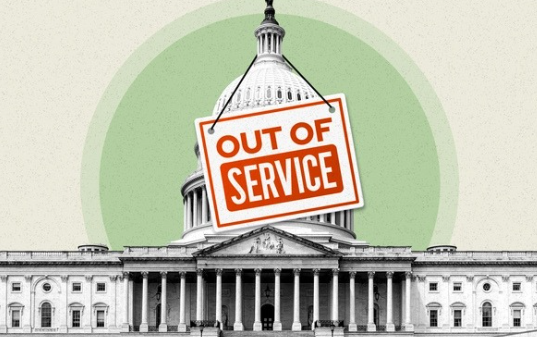
The first government shutdown in nearly 7 years began on October 31st. So far, this government shutdown has been the longest in history, with both Democrats and Republicans at a gridlock over where to allocate government spending.
When a government shutdown occurs, it’s because Congress couldn’t decide on a budget for the fiscal year, resulting in federal agencies halting all non essential functions.
The impacts of the government shutdown are mainly economic. Ultimately, the shutdown negatively impacts the economy because people aren’t getting paid and services aren’t getting funded.
“[The government shutdown] slows the economy. You have a large number of people that are not currently getting paid. There’s a lot of anxiety around that. I mean, you have people that live paycheck to paycheck that rely on their government jobs, and if they can’t pay the rent or can’t pay for food, that’s a problem,” said government teacher John Thorson.
The economic effects of the shutdown have been felt nationwide, and as the shutdown stretches longer and longer, the effects will worsen.
“The farther this goes along, this has economic ripple effects, which is, you know, and, and not to, not to mention you have government employees that aren’t being paid, but also soon you may have people losing their SNAP funding, food stamps, WIC, women, infants and children. You know, these are very important programs and they’re bipartisan programs as well,” said government teacher Brian Taylor.
The effects of the shutdown are amplified in our area because of our proximity to D.C. and because of the high volume of federal workers that live here.
Many students have parents who are active duty military, government contractors, or federal employees for agencies such as the Department of Justice (DOJ) or the Department of Defense (DOD).
“[The government shutdown] has a disproportionate impact on our area because we have so many federal employees and therefore our economy is based on the pay of those employees. And so I’m sure there are a lot of parents of West Springfield students that have been unable to go to work for the past three weeks and aren’t being paid. So you then project from what’s happening with Springfield and then what’s happening throughout the area. And so it does have a disproportionate impact perhaps on an area because we’re so dependent not only on government employees but also contractors and other people that also their funding may be frozen, ” said Taylor.
The shutdown has left thousands of federal employees furloughed, meaning they are placed on a temporary leave of absence and are not being paid.
“So my mother is currently staying at home and is not going to work. She is one of the couple who have been completely furloughed. It is said that she will receive back pay for the time that she did work during the pay period, but it doesn’t really help the families who would need that money now because they’ll receive it once the furlough’s over and the government is back up and running,” said junior Sage Cunningham.
Employees who are considered “non essential” are placed on temporary unpaid leave. Federal employees who are considered “essential,” such as law enforcement and the military, are still reporting to work. This means some people’s parents are working without pay.
“My dad still has to go to work, but he’s not getting paid. So we’re not getting paid,” said junior Evie Englert.
However, students’ parents who are still working are sometimes facing difficulties doing their job.
“I know it’s definitely become a lot harder because I’m pretty sure because he’s kind of in the military area. I know they’re still getting emergency funding. But I think it’s made it a lot harder, just like trying to work with other branches and is trying to like get like even outside people to come help,” said senior Fran Cortesi.
Due to the financial insecurity the shutdown had caused, some families have been forced to budget and spend less on outside goods.
“We’ve been spending less money on activities, spending less money eating out, spending less money on items and stuff, less purchases,” said junior Sam Graham.
Additionally, the government shutdown can emotionally impact those with parents that are federal employees. During a shutdown many families can experience financial problems and the stress that parents feel can be projected onto students.
“Yeah, I’d say there’s, it’s definitely tighter, like more uptight around the household. You kind of feel what they’re feeling a little bit,” said Graham.
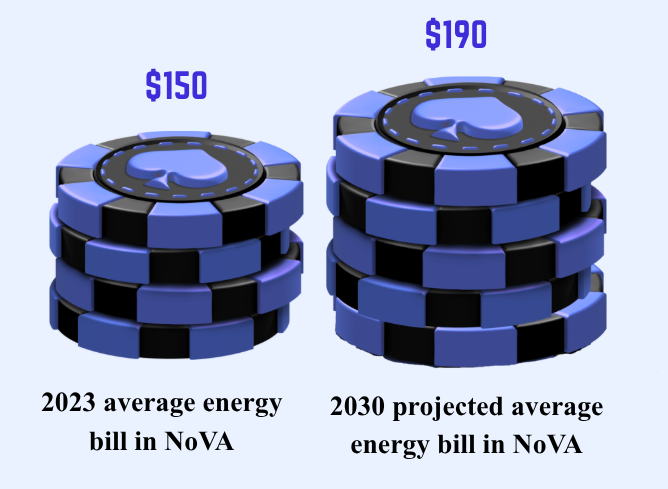
Northern Virginia has one of the highest costs of living in the country, so government shutdowns can be particularly impactful because everything is so expensive in our region.
“My mom’s been pretty diligent about what kind of money we’re spending. And also she like talks about it a lot to us because she’s in a single income household and we don’t have that paycheck right now. She’s demonstrated the pressure to us because she could potentially be out of a job for a year. And if that’s the case, then we won’t be able to continue to afford to live here” said junior Annaleah Corado.
Overall, the government has had various impacts, both emotionally and economically on students and their families.