Approaching the 2025 school year, Executive Order 33 was passed, banning all personal electronic devices, including headphones. Though headphones are merely deemed a distraction by lawmakers and staff, what they did not take into consideration is the policy’s harsh effect on student’s focus and mental wellbeing.
FCPS claims, citing Common Sense Media, that students find “difficulty regulating their own technology use.” But, how many students does that actually apply to?
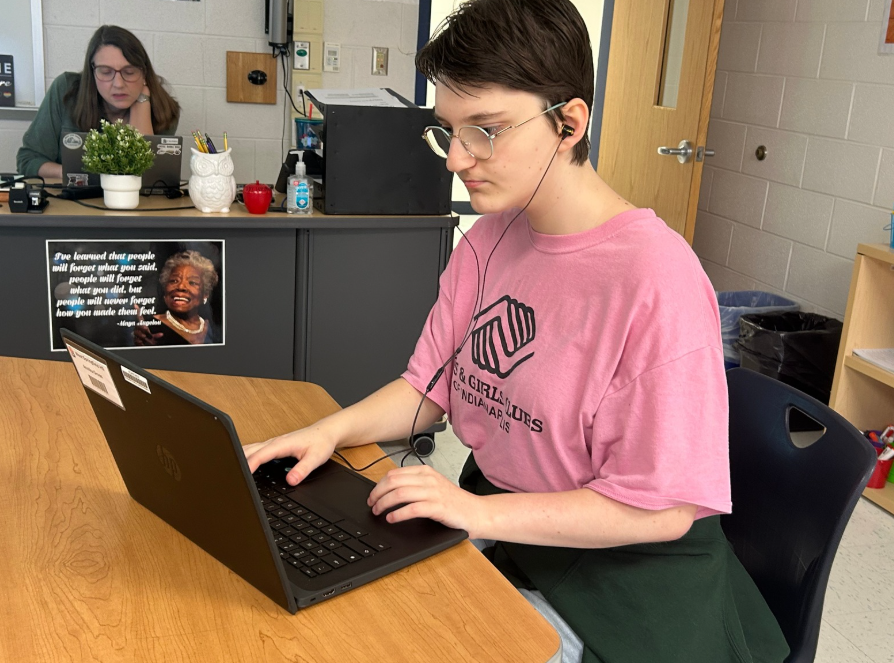
“Yes, some students use headphones or earbuds to avoid work or tune out their teachers. However, when there’s no instruction happening, it’s hard to focus in a room that’s quiet but not silent. There’s still distracting noises even if other students aren’t talking,” said junior Eliot Lillard. “It doesn’t make sense to [completely] ban headphones when only some people are misusing them.”
Blocking out noise with headphones has proven to be very useful in regards to maintaining focus and retaining information. A study conducted by the Journal of Acoustical Society of America found that students who wore noise cancelling headphones in class had a recall rate of 85%, while students with bare ears had a recall rate of 65%.
“Headphones help me focus by tuning out the noise of the classroom and lowering my distraction rate,” said senior Annika Gross.
Not only can headphones drown out noise, they can additionally do the opposite, leaving the same positive effect.
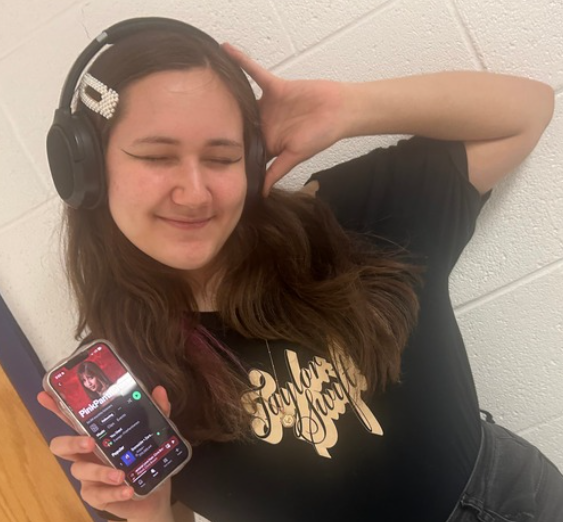
Listening to music through headphones works wonders for students whether it be in class or in the hallways.
“Listening to music definitely helps me focus, especially in a loud environment where I need to work,” said senior Kalina Chang. “Throughout the day, I end up getting stressed and tense, so being able to listen to music while I do work can be extremely helpful in regulating my stress and calming me down.”
As the school population skyrockets more and more with every new freshman class, the hallways are always bustling with overwhelming noise. With headphones being prohibited, many students with hearing sensitivities and anxiety disorders suffer.
“I think headphones should at least be allowed in the hallways, otherwise I get overstimulated and stressed out. Headphones help a lot of people with sensory issues,” said Gross.
By permitting headphone use to all students, everyone with or without approved accommodations can take care of themselves and meet their needs.
“Right now, I wear my headphones in all my classes,” said Lillard. “But in 9th and the beginning of 10th grade, I would ask all of my teachers to allow me to wear my headphones so I wouldn’t get in trouble.”
Leaving students without ear protection can cause even more learning disruptions, and staff should be more mindful of the effects.
“My biology teacher refused, that was the only class I couldn’t wear them in,” stated Lillard. “In that class, I was constantly distracted or agitated. If I had just been allowed to wear headphones, I would have had a much better time.”
Airpods specifically are frowned upon due to how easy the earbuds are to hide under long hair or a hood. As an attempt to erase this problem completely, only wired headphones are allowed for specific circumstances. To accommodate everyone, the state should take less of a black and white approach.
“I feel as though the headphone ban was somewhat unnecessary, especially if they’re allowing wired headphones. I understand preventing Airpod use during class, but in that case, wouldn’t it work better to ban Airpods? It doesn’t seem necessary to me to ban all headphones unless you use wires, it just makes it inconvenient for everyone else,” said Chang.